| Services | Harmony Test
The Illumina VeriSeq NIPT test replaces the Harmony test, offering more accurate prenatal screening from just 10 weeks gestation.


We offer this NIPT test in order to give women and parents a chance to feel more confident about their pregnancy, the health of their growing foetus, and to allow them to prepare for the birth of their child.
This NIPT test checks for Down Syndrome, Patau’s Syndrome and Edwards Syndrome. It can also look at sex chromosome abnormalities but the predictive ability is much lower.
This test offers analysis for the same conditions as the Harmony NIPT including foetal sex and sex chromosome aneuploidies. There are also additional benefits from the Harmony test:
NOTE: if there is a positive result we will arrange a telephone call (included in the price) with one of our doctors to discuss this and explain next steps.
This is a blood test only – we do not provide an ultrasound scan at Vitalis Health.
Book online below or read our FAQs for more information. You can also call our team on 028 9691 3000


Verified Google reviews from patients who’ve experienced our personalised care.
All our doctors are NHS-trained, GMC registered, and passionate about supporting patients in achieving long-term health improvements.

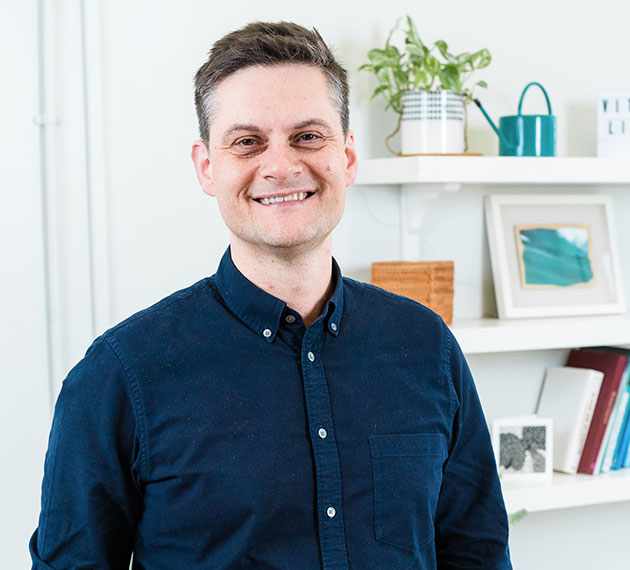
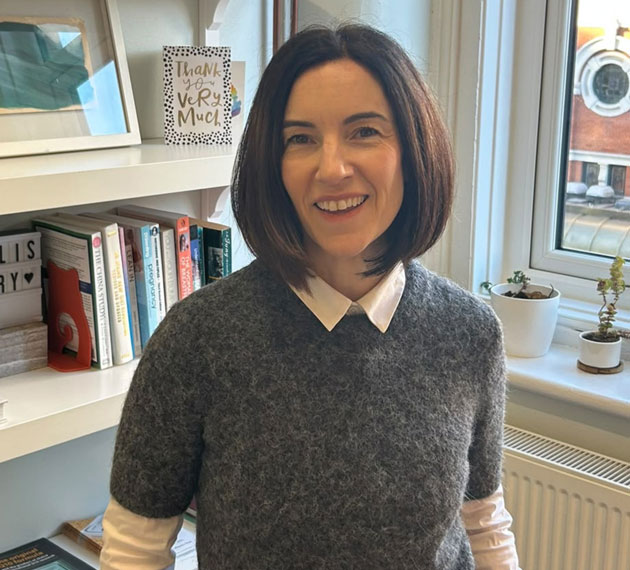

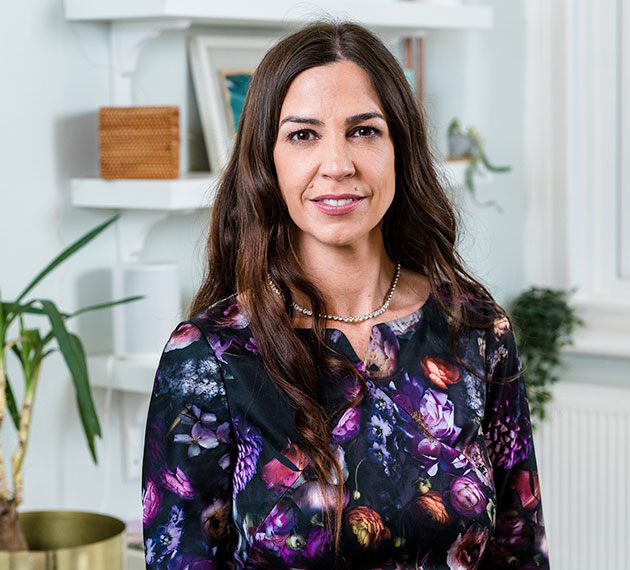
Phlebotomist & Health Care Assistant
Tina has been working as a phlebotomist and health care assistant in Vitalis since May 2021, She is skilled in taking bloods, removing ear wax with suction and doing health checks.
Tina also assists Dr Rory during minor surgery.
She continues to expand upon her skill set as a natural learner and is an integral part of our team.
She worked for 25 years as a practice manager in a GP Surgery in Belfast and brings this experience to the team.
“There are so many things I love about working here. It’s a friendly relaxed environment, with a brilliant supportive team. I love building a rapport with the patients when they attend the clinic.”
We love having Tina in the clinic!
GP
Dr Russell joined Vitalis Health in 2021 bringing his experience as an NHS GP and personal interest in mind body medicine to the clinic.
Dr Tim has a diploma in Lifestyle Medicine from the British Society of Lifestyle Medicine. As an extension of this he has a particular interest in treating disease through lifestyle modification – especially in areas where psychological problems, such as stress, contribute towards physical problems such as high blood pressure, headaches, fibromyalgia and Irritable Bowel Syndrome (IBS).
He is also skilled in performing joint injections and has a lot of experience dealing with difficult to manage eczema and dermatitis.
He graduated in Medicine from the University of Newcastle-Upon-Tyne in 2000. After working in various hospital specialties in England, New Zealand and Scotland, he qualified as a GP in 2006.
Alongside his Vitalis Health role, Dr Russell continues to work as an NHS GP partner in Northern Ireland.
GP
Dr Sarah brings her strong clinical skills and attentive nature to enhance our medical team.
She has a broad medical knowledge base. Her particular interests are in women’s health – including menopause and perimenopause. She holds a menopause training post graduate certificate from the British Menopause Society (BMS).
Dr Sarah also has lots of experience in general medicine and mental health. She has completed a master’s in psychotherapy and understands how every case is unique.
Dr Sarah has over 20 years experience working as a doctor and enjoys keeping up to date with medical advances, changes in guidelines and novel treatments. She also has an interest in psychotherapy and considers medicine a vocation.
Dr Sarah has a young family and also works as a GP partner within the NHS.
GP
Dr McKeown has over 20 years experience as a doctor. He skilled in performing minor operations such as mole and sebaceous cyst removals which he does on Mondays and Wednesdays. He is also trained in skin mole examination using a dermascope. Dr McKeown is an attentive and compassionate GP.
In his spare time he enjoys an active lifestyle, and believes in preventative medicine through lifestyle modification such as exercise, diet and stress reduction. Dr McKeown also believes that patients should have a doctor who supports them during their health journey.
GP
Dr Jen brings her menopause expertise to our women’s health team.
She holds a menopause training post graduate certificate from the British Menopause Society (BMS). She can help you through the perimenopause and menopause as well as assisting with contraception advice.
Dr Jen understands the importance of the right food for health, the importance of addressing underlying stressors in your life and the impact of stress on your wellbeing and immune system.
She is thrilled to practice her holistic approach to patient care – something she is passionate about. To highlight this passion, Dr Jen teaches meditative dance and reformer pilates.
We welcome Dr Jen to the team to uphold our holistic approach to your care.
Regular GP care? Our membership plans offer discounted appointment rates, priority booking, and annual health checks.

We’ve answered the most common questions below. If you don’t find what you’re looking for, our team is happy to help.
Sex chromosome conditions occur when there is a missing, extra, or incomplete copy of the X or Y chromosomes.
For the NIPT veriseq assay, there are 4 sex chromosome conditions that can be detected XXX, XXY (Klinefelter syndrome), XYY and X (Turner Syndrome). X (Turner Syndrome can also be selected without the others if the couple only want to know about this more severe condition).
This option will be discussed at your appointment to determine whether requesting this is right for you.
This option is not available for twin pregnancies.
Sex chromosome testing is not as accurate as the other chromosomes test ( Downs, Edwards, Patau’s Syndrome)
You can read a relevant paper here about sex chromosome tests
The detection rate is high across the sex chromosomes for the 4 aneuploidies (>90%) but the positive predictive value (PPV) is ~50%. This is due to placental mosaicism, fetal mosaicism and maternal sex chromosome variants (all of which are more frequent in the sex chromosomes than for chromosomes 13, 18 & 21).
The Illumina VeriSeq NIPT test replaces the harmony blood test, which looks for genetic material- circulating in the mother’s blood- that has come from their developing foetus. This is a method used to determine the risk for the foetus being born with certain chromosomal abnormalities.
The testing is non-invasive: it involves taking a blood sample from the mother. The pregnancy is not put at risk of miscarriage, or from other adverse outcomes that are associated with invasive testing procedures such as amniocentesis.
It is only done in women who are aged 18 to 48 years old.
The Illumina VeriSeq test works in the same way as the Harmony test. This genetic material is analysed to assess the chromosomes of the foetus. It can look at the sex of the foetus and for trisomy 21 (Down Syndrome), 18 (Edward’s syndrome) and 13 (Patau’s syndrome). Other sex chromosome conditions can also be predicted with the test.
How accurate is the Illumina veriseq NIPT test?
The Illumina Veriseq NIPT test is MORE accurate than the Harmony test, and whilst it is not 100% accurate, it is very useful for estimating the risk of the foetus having a chromosomal abnormality.
Around 2% of blood samples taken from a pregnant mother will not have enough genetic material from their foetus to analyse appropriately, and so the test will have to be repeated in these cases; there is no charge for repeat testing in this case.
If you do not want to repeat the test, we can offer a refund of £300 which covers the cost of the test.
Fetal sexing is >99% concordant, in the data from the validation it was 100% but we do occasionally see fetal sex discordance due to rare biological reasons or demised twins. This means in less than 1% of cases the fetal sex may be incorrect.
Down syndrome is a life-long condition that a person is born with. It can cause learning problems and medical problems affecting the heart, blood, digestive system, and other organs. The learning and medical problems in people with Down syndrome can be mild or severe.
People with Down syndrome have a problem with their chromosomes. Chromosomes are tiny parts of cells that carry the plans that make our bodies the way they are. People with Down syndrome have an extra chromosome. This is what causes their health problems and makes them look a little different than people without Down syndrome.
About 1 in 500 babies in the United States is born with Down syndrome. As you get older, your chances of giving birth to a baby with Down syndrome get higher. But it can happen at any age.
You are also more likely to have a baby with Down syndrome if you have a close family member with the condition.
During pregnancy, you can choose to have:
Screening tests – These are tests that can tell you if it is likely that your baby has Down syndrome. But they do not tell you definitely.
Diagnostic tests – These are tests that can tell you for definite if your baby has Down syndrome.
You can also choose not to have screening or diagnostic tests.
Different screening tests are available depending on how far along you are in your pregnancy.
Screening tests can involve:
Blood tests – This involves taking a small amount of your blood for testing in a laboratory.
Ultrasound – This is an imaging test that creates pictures of your baby.
Having a screening test does not increase your chance of having a miscarriage. (A miscarriage is when a pregnancy ends on its own before 20 weeks.)
If a screening test shows that there is a high chance that your baby has Down syndrome, you can then choose to have a diagnostic test to find out for sure.
Two types of diagnostic tests are available:
Chorionic villus sampling – a doctor removes a tiny piece of the placenta. The placenta is the organ that brings the baby nutrients and oxygen and carries away waste. Chorionic villus sampling can be done by putting a thin tube through your vagina and into your uterus, or by inserting a needle through your belly. This test is usually done at 11 to 12 weeks of pregnancy, but it can be done as late as 14 weeks.
Amniocentesis – During amniocentesis, a doctor puts a needle through your belly and uterus and then removes some of the fluid that is around the baby. This test is usually done between 15 and 20 weeks of pregnancy, but it can be done later.
It is important to know that having one of these diagnostic tests gives you a small chance of having a miscarriage because of the test. Your specialist can discuss the chance of miscarriage with you.
This is a personal decision. If you are not sure what to choose, your doctor or nurse can talk to you about the benefits and downsides of the different options.
You might choose a screening test if you want to understand whether your baby has a high or low chance of having Down syndrome. You might feel that you will worry less if there is a low chance that the baby has Down syndrome.
You might choose a diagnostic test if you want to know for sure if your baby has Down syndrome. You might want the option to have an abortion, or you might want to continue with the pregnancy but have as much information as possible.
You might choose to have no tests if you feel that “whatever will be, will be.” This might be your choice if you know that you would not do anything differently no matter what the test results showed.
If the Illumina veriseq NIPT test showed that there is a high chance your baby has Down syndrome:
You might be able to have another, different screening test, which can give you a better idea of how likely your baby is to have Down syndrome
You can have a diagnostic test to know for sure if your baby has Down syndrome
You can choose to not have any more tests done during pregnancy. You can wait until birth to have a test done to find out if your baby has Down syndrome.
You can talk to obstetrics specialist or fetal medicine specialist to help you make a choice.
Mon: 8:15am – 4:30pm
Tue: 8:30am – 4:30pm
Wed: 8:15am – 4:30pm
Thur: 8:30am – 4:30pm
Fri: 8:30am – 4:30pm
Sat – Sun: Closed


